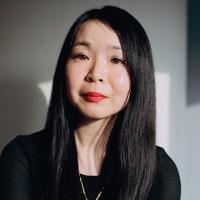
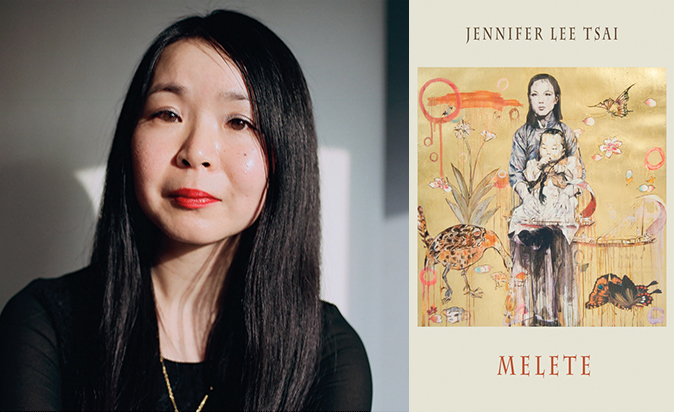
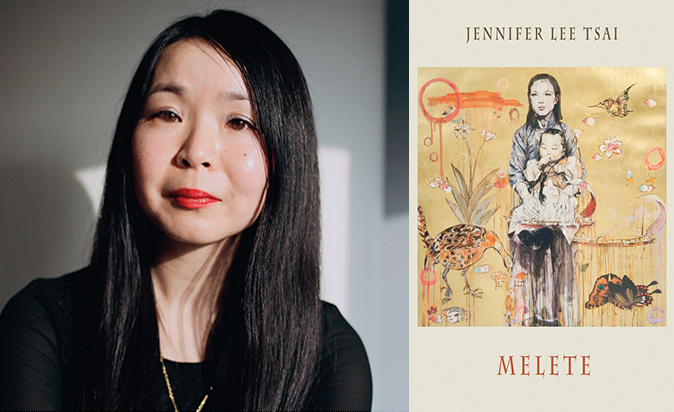
Jennifer Lee Tsai will be reading at Wirral Poetry Festival on 4 Oct (with Cathy Galvin); her joint online launch is now on YouTube, as is her film poem 'Fallen Star'.
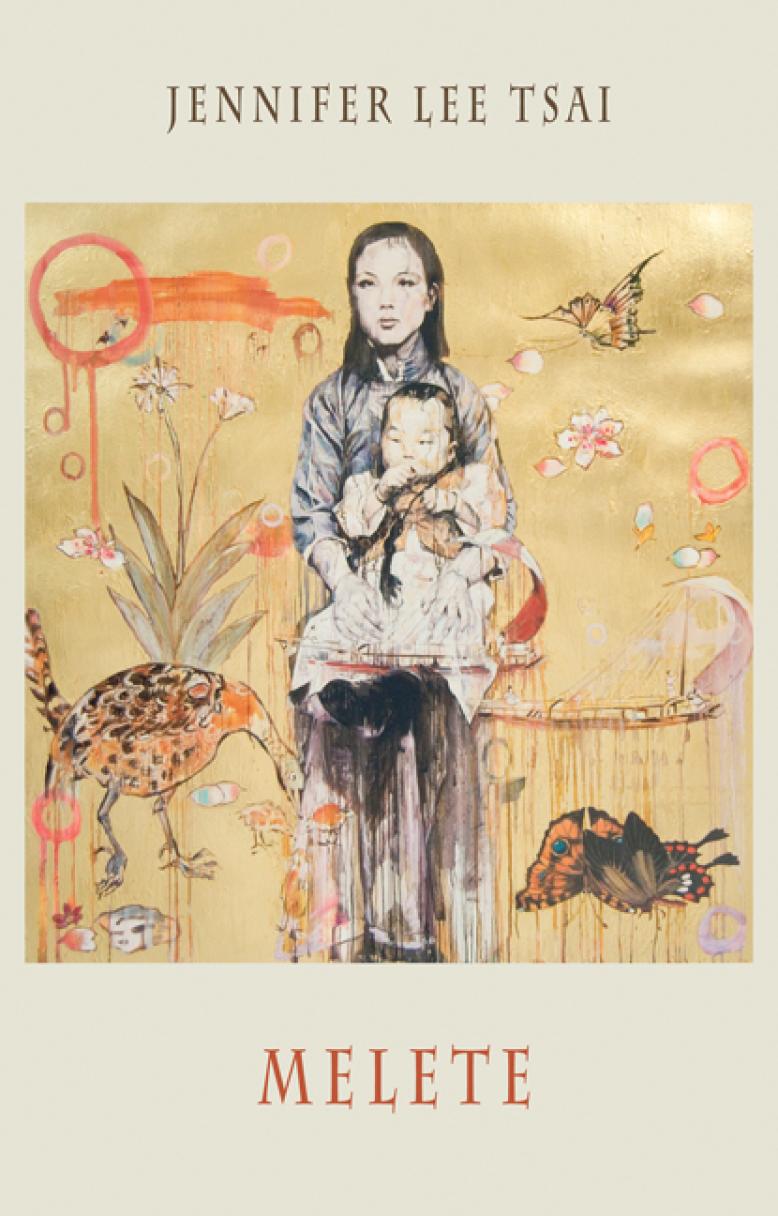
Jennifer Lee Tsai's debut Melete reviewed in The Observer & The Guardian
Poetry Books of the Month reviews in The Observer and The Guardian; conversation with Jennifer Lee Tsai online at Poetry London; review in The Alchemy Spoon Autumn issue.
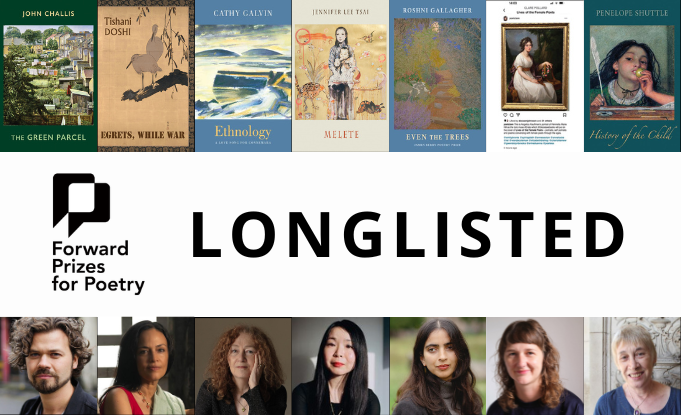
Bloodaxe titles longlisted for the Forward Prizes 2026
Seven titles published by Bloodaxe were longlisted for the 2026 Forward Prizes longlists (including three for the Jerwood Prize for Best First Collection).
said aloud, sounds nothing like the English transliteration
on my birth certificate.
My Chinese name –
a secret? One that only my people know,
and only some of them.
As a child, I played in the neighbourhood
until the sun dropped low
and my mother called me home.
My English friends rejoiced in my musical name.
My English birth – certified by my father.
This is England, the country where I was born.
This is my home.
A glance at the past –
this country has no memory of me being here.
The present moment –
do you see an image of someone like me,
seen as English, up on screen?
*
Origins
A boy from Canton escapes from Communist China
during the Great Famine with his older brother.
Year – circa 1962, my father, my uncle, aged 14 and 21.
Two young refugees, swimmers for freedom and liberation.
They hazard the perils of Mirs Bay, where sharks have devoured
humans. No one leaves home unless home is the mouth of a shark.
They have practised swimming for months in the Pearl River.
They swim for hours; two brothers tied together by a rope.
My uncle – stronger, broader, supports his brother –
my adolescent father. They battle the melanoid currents,
risk their lives to reach another horizon.
They skim and scan for dangers – the omnipresent
threat of border police controls, gunboats.
My grandmother’s brother has hired a boat to meet them.
No one puts their children in a boat, unless the water is safer than the land.
Finally, they reach Hong Kong’s harbour, moored,
anchored temporarily. From there, my father migrates
to Liverpool as a student, my uncle travels later as a seaman.
My father’s exact birthdate is unknown – 1949 or 1950 –
Year of the Earth Ox or the Metal Tiger.
October 1, 1949 – Mao Zedong declares the creation
of the People’s Republic of China. My father invents
his age to attend a year of secondary school in Liverpool.
May 16, 1966 – the Cultural Revolution starts. It ends October 6, 1976.
My grandparents are poor but they are blessed with abundance –
they are blessed with four sons,
they are blessed with love, a new life in England.
They work, they toil, they save.
My grandparents strived so hard, all their lives.
The family businesses – a café, restaurants, takeaways.
Sacrifices made in silence. They never complained.
The rice grains of memory become refined and polished like pearls.
*
South China Tiger
My father stands tall and strong
in his humble family home in Liverpool.
Lurid background of 1970s geometric wallpaper.
A young man, early twenties,
suave in his turquoise shirt,
silver faux Rolex watch,
hair slicked back with Brylcreem.
His hopeful gaze at the camera –
he wants to reach out to the world.
He is holding the forest green handset
of a rotary phone to his ear.
Hello world, I am here. He wants to say.
My father loved music –
the crackle and spin of vinyl on a turntable,
cassette tapes playing Neil Diamond,
The Three Degrees,
Karen Carpenter’s pure contralto,
the songs of yesterday.
My father is making his way
in a white man’s world, to provide for his family.
He brings with him from China to England –
a laughing Buddha for joy,
an ivory peony for honour,
a bowl of satsumas for prosperity.
He is armed for the grand battle
on an English field of dreams –
this green and pleasant land
where the immigrant labours, endlessly.
My father is prowling
around with his demons.
But he is winning.
Fierce tiger, burning bright, born to sweet delight
in a cage of suburbia, rising up
to the British class and race struggle.
My father opened doors for me.
He set me free.
Contents List
I MELETE – PRACTICE / THOUGHT
10 Three Muses
11 Preface for Melete
13 Who is Melete?
16 Where does Melete live?
18 Notes towards a race riot
20 Outpour
21 On being ‘British’
22 Reflections
24 The Sleeper’s Muse
25 An Old Flame
26 Being the Other
28 Sleeping with the devil incarnate
30 Rebirth
32 Melete’s meditations
38 Music Practice
40 Ritual Bridge, White Clouds Monastery
41 Desires
42 Moth Orchid
44 The recuperation of fragments
46 St Andrews
47 The Artist
48 The Yellow Woman
II MNEME – MEMORY / REMEMBRANCE
53 Breathing
54 Origins
56 Risk
57 I remember
58 Ancestors
60 South China Tiger
62 Tso Kin Tsai
64 The Age of Innocence
66 Why?
67 Kuk Po
68 The New Territories
69 Last night
70 1961
72 About Chinese Women
76 Fallen Star
78 Kismet
80 Going Home
82 Between Two Worlds
84 Tomb Sweeping Festival
85 Love Token
86 A Fisherman Prays in Twilight
88 Swallows
89 The Meaning of Names
90 Mossley Hill, South Liverpool
92 Things I’ve broken
III AOEDE – SONG / VOICE
96 British Chinese Girl
98 Discourse on the longing of language
99 Self-portrait at Four Years Old
100 Wild Horses
102 Another Language
103 Mersey River
104 Black Star
105 A Certain Purity of Light
108 Flower
109 Syncope
110 La Mystérique
112 Litanies of the Moon’s First Quarters
113 The Pendant
114 Dama de Noche
115 Vivien Leigh’s négligée
118 Christmas Eve
119 A Prayer for My Grandmother
120 Fantasia
121 Liverpool
123 British Chinese/East and Southeast Asian Citizen
132 The Golden Phoenix
134 I write the orange
136 Nightfall
138 Façade
140 Notes
143 Acknowledgements
Related Reviews
Reviews of Jennifer Lee Tsai's pamphlets:
‘Kismet explores with sensitivity the gaps between generations, cultures and belief systems…we encounter versions of femininity that defy stereotypes…Filled with darkness and hope, Kismet conjures a world where the divide between the living and the dead becomes indistinct, where inner strength and love can transcend fears and bring healing.’ – Jennifer Wong,The Poetry Review
‘Jennifer Lee Tsai is a great find, balancing a certain lightness of touch with a questing, plainspoken sincerity. She uses her imagery delicately and well, with irony…the overall atmosphere of her work is one of effortless mobility and freedom, never dragging the reader down. The poems set in Hong Kong are standouts…’ – Bidisha,The Poetry Review
‘A central challenge for Lee Tsai in La Mystérique is how a person’s selfhood may be known in the face of denial. Exploring her family’s narratives of migration...Lee Tsai questions the forces and absences which shape both their journeys and the recording of their lives.’ – alice hiller, Poetry London
‘Jennifer Lee Tsai’s La Mystérique speaks against the silences of British-Chinese immigrant history, concerned more with ecstasy…A work of searing inquiry, intellectual acumen and the restlessness and resilience of language…It is utterly compelling work, moving inquiry about personhood, subjectivity and the matter of the lyric ‘I’ into a place of spiritual transcendence and consciousness.’ – S. Niroshini, Magma
‘These poems, which explore Chinese/Liverpool identity, bring a distinctively Northern British voice to the kind of expansive and mixed form of lyrical/essayistic poetry which is developing so richly and importantly in the U.S. and harks back globally to many older traditions of the fusion of prose and verse, music and argumentation…Writing on the Mersey River as a place of arrival and claiming it for the Chinese/Liverpool history is absolutely crucial to our clear-sighted and evolving vision of Britain today, with its histories tenderly transiting between intimacy and estrangement and back again.’ – Anthony (Vahni) Capildeo, Northern Writers' Awards