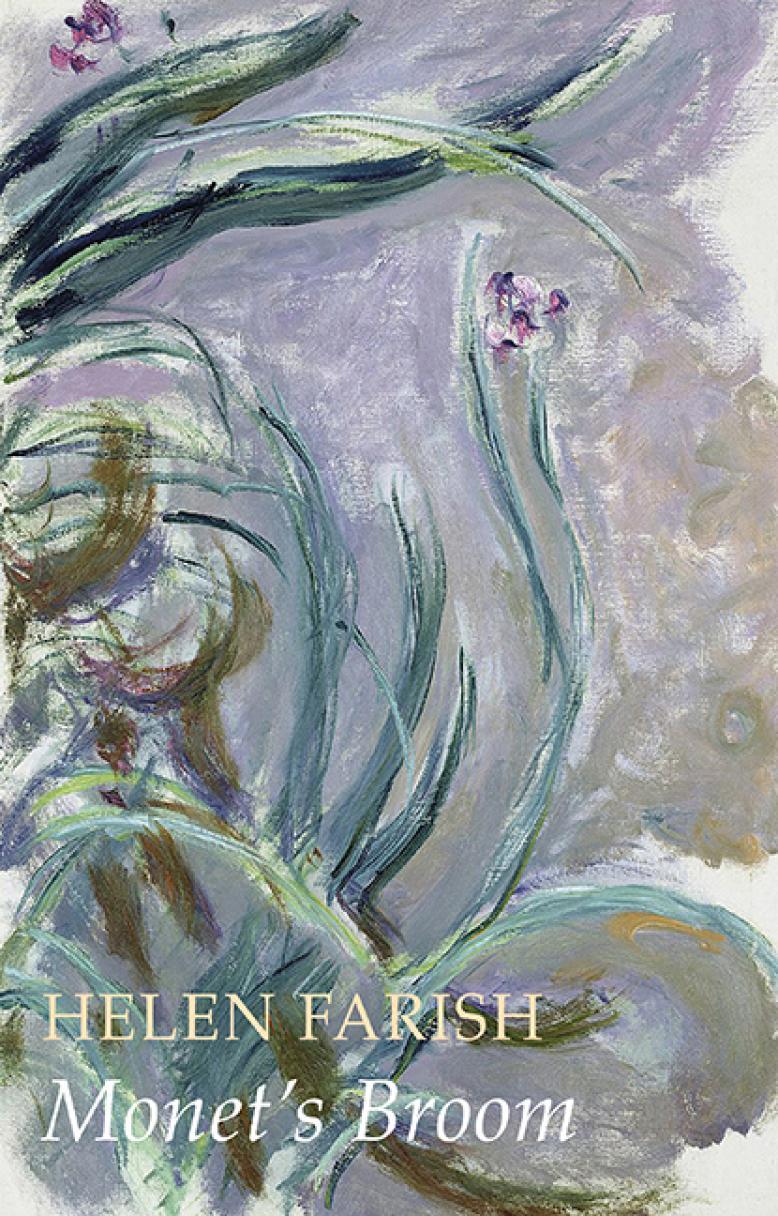
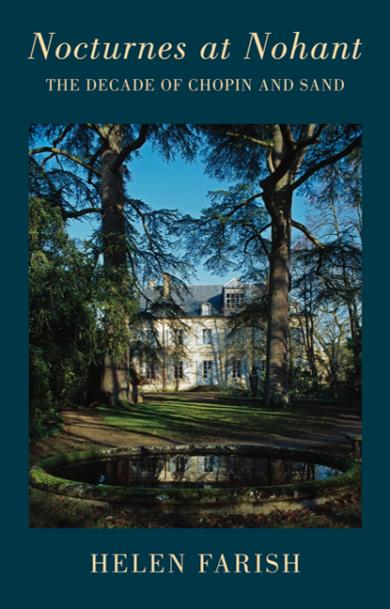
Launch reading with Helen Farish, Maitreyabandhu and Grace Nichols
Helen Farish and Maitreyabandhu joined us live for the launch of our November 2026 titles, with a special recording of Grace Nichols reading at Newcastle University....
When I painted the melon years ago,
I wanted the viewer to feel they could almost reach
for a slice. I threw in some grapes to highlight
the smooth cloth and anchor perspective.
But now, painting these cakes, I see my technique
has ripened. I care less whether anyone will say
I’ve made them hungry or they can smell
that straight-from-the-oven smell. And look at the cloth –
it could be the choppy winter sea at Belle-Île,
and the cakes could be rafts adrift, at the mercy
of radical new currents in the history of art.
I’ll never look back from this taste of freedom,
even if the critics turn up their noses and declare
that the cook herself could have done better.
*
The Red Cape, Portrait of Madame Monet, 1873
How bleak the floor is, how stained
from snow thawing under the ill-
fitting doors.
And who is that woman
looking in from outside like a stranger
trying to recognise her own life?
*
Camille Monet on Her Deathbed, 1879 Camille speaks
Who wants to be immortalised
after five days and four agonising nights,
your lips drawn back from your teeth
with the effort of dying, the labour of it?
Couldn’t we have had a private moment,
just he and I, for once, not he and I and his art?
He reached for his palette, closed the door,
and became as absorbed in this portrait of me
as I began being dead as all those he painted
while I was alive. It’s merciless, his gift –
he won’t know any peace or enjoy any rest
until the day he lies on his own lit de mort.
*
The Day Monet Meets Giverny
It’s April. The light is the same colour
as the flesh of the apple he is eating
on his way to the train whose line follows
the Seine as it performs regal loops
through the Normandy countryside.
There’s one last village he hasn’t tried.
A pink house with grey shutters, someone says.
Pink and grey, he thinks, pigeon colours.
The ruelle Leroy then the rue de l’Amiscourt.
There’s a walled orchard, apple trees
in blossom. A low barn suitable for a studio.
Linden trees, two splendid yews.
He senses that the house – an old pressoir –
is smiling at him, the oeil-de-boeuf
winking when he looks up.
He can picture Alice on the veranda
smoothing down a cloth, and later, by the river,
he discovers Nettle Island, somewhere
to moor his studio boat and the skiffs.
No ifs this time – life is finally giving him
a place to bite into, and he knows it in his core.
*
Monet Buys a Marsh
At the auction when Monet outbids the planners,
the world loses a starch factory but gains records
of a place so deeply loved by one man, it’s as if,
when he is painting the poppies gulping down the day,
or the airy pearl blue of an untrammelled morning,
or the yellow water iris which grow in their thousands,
the violet-mauve cast they acquire at twilight,
or the painterly poplars in the near distance,
or the gunmetal green shadows, the lilac shadows,
or the marsh’s sheer nowhereness
which is one of the best he can name,
he is making of his soul an heirloom
which will be passed down and passed down,
uncommodifiable.
*
The Sale of a Strip of Meadow
When Madame Rouzé agreed to sell
a strip of her meadow, Monet had never parted
with his francs so fast, even though the meadow
had nothing painterly about it: it was choked
with weeds and briars, and the only stream
couldn’t remember when it had last flowed.
But the land joined his garden on the opposite bank
of the Ru, and would enable him to triple
the size of his pond and create the water garden
of his dreams: a Japanese bridge, wisteria, iris,
agapanthus, willow, bamboo, and the water lilies
which would topple Rouen cathedral, the cliffs
at Étretat, the grainstacks, the poplars, the bridges,
once they became his obsession: his War and Peace,
his Late Quartets, his Pietà, his Requiem.
And while he respected the clause in the Deed of Sale
regarding the diversion of the Ru, what he painted
of Madame Rouzé’s former meadow, now home
to the rafts of water lilies on which he balanced
his reflected self, broke all the laws
of the Western history of art.
Contents List
I
13 Oscar Claude Monet: This Is He
14 Diptych
14 1 Monet at La Grenouillère
15 2 Renoir at La Grenouillère
16 Mistress
17 Women in the Garden, 1866
18 How to Sell a Painting
19 My Life in Rooms
21 Camille and Monet on the Beach, Trouville
22 The Red Cape, Portrait of Madame Monet, 1873
23 The Underside
24 Monsieur Hoschedé Invites Monet to the Château de Rottembourg
25 The White Turkeys: Monet Is Observed by Alice Hoschedé
26 The Seine at Vétheuil
27 The Seine Speaks to Him
28 Camille Monet on Her Deathbed, 1879
29 Nasturtiums in a Blue Vase, 1879
30 Madame Prétot, the Village Washerwoman
31 This Pitiless Winter
32 Camille’s Middle Name
33 Letter to My (First) Husband
34 The Path in the Wheat
35 Monet’s Garden at Vétheuil, 1881
36 Still Life
37 The Farmer Ploughing Too Close to the Cliff
38 The Bridal Party
II
41 The Day Monet Meets Giverny
42 The Monet-Hoschedé Bridge
43 Nowhereness
44 Letter to Alice from Bordighera, Italy
46 Monet Buys a Marsh
47 Pays Perdu
48 The Afterlife of a Portrait
49 Noon
50 Beaux Jours
54 Les Meules (1)
55 Les Meules (2)
56 Les Meules (3)
58 Portrait of Suzanne
59 Monet Confesses to Renoir
60 Monet in London
60 1 Elevation
61 2 The Thames Speaks to Him
62 3 The Life of Air
63 Monet Returns to Vétheuil
64 Monet and Alice in Venice, 1908
64 1 A Photograph
65 2 Gilt Offerings
66 3 What the Mirror Saw
68 Mon Amour
69 The Sale of a Strip of Meadow
70 His War Work
73 Thanking Blanche
74 Monet’s Broom
75 Monet Thinks of Baudelaire
76 Claude Monet on His Deathbed
77 Monet’s Bell
III
81 Photograph of the Musée de l’Orangerie, c. 1930
82 Timeline