Poetry Book Society Choice
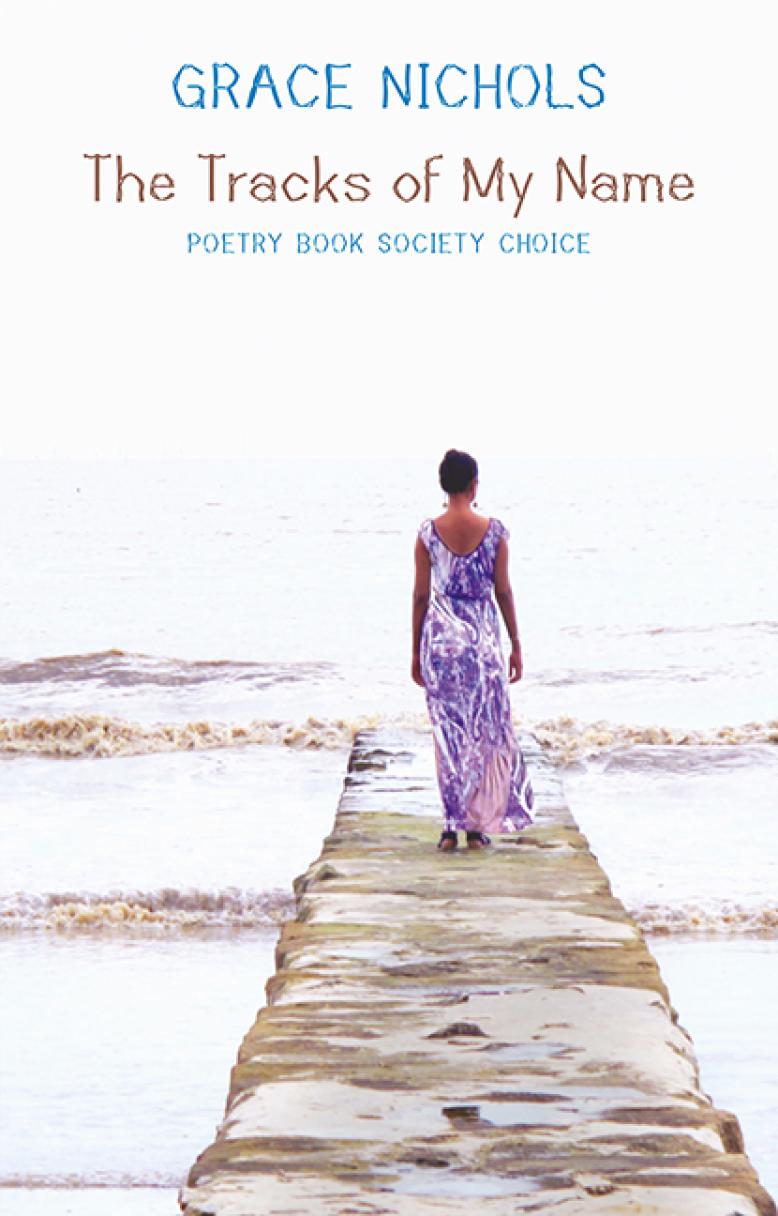
The Tracks of My Name sees Grace Nichols embarking on a journey across the English countryside to the small town of Olney in Buckinghamshire.
Olney was where the one-time English slave-trader (later abolitionist) John Newton lived and wrote his famous hymn, Amazing Grace which inspired her Guyanese Methodist parents to name her Grace Olney after both hymn and place.
A narrative sequence that reads as a personal quest,
The Tracks of My Name lyrically and imaginatively explores the relationship between memory and history, conscience and greed, a sense of place and love of landscape, through her own distinctive way of viewing the world. Even when confronting some of the more unsavoury aspects of Empire, she makes a space for redemption, continuing the interweave between her Guyanese/Caribbean and British heritages.
And as Ocean lashed its leviathan tails
and Wind wailed like a chainsaw carried
by drowned slaves, John Newton, slave-trader
and self-confessed blasphemer, began to pray…
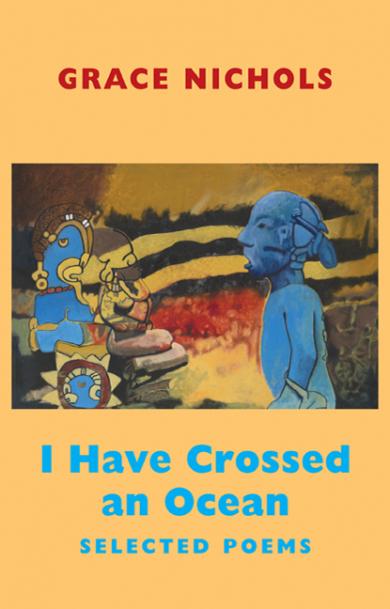
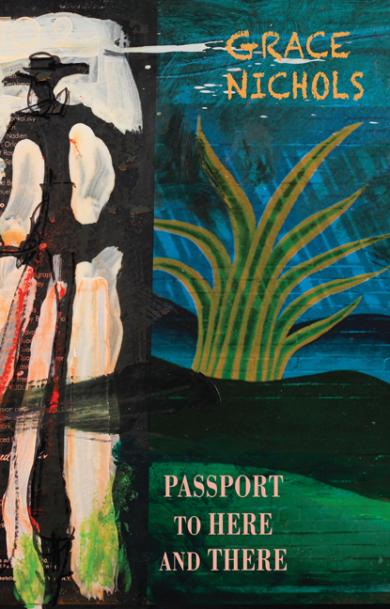
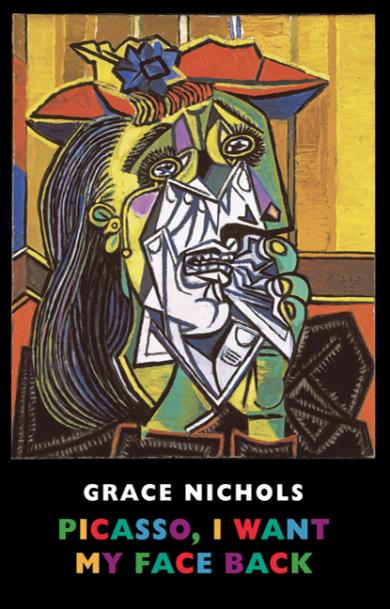
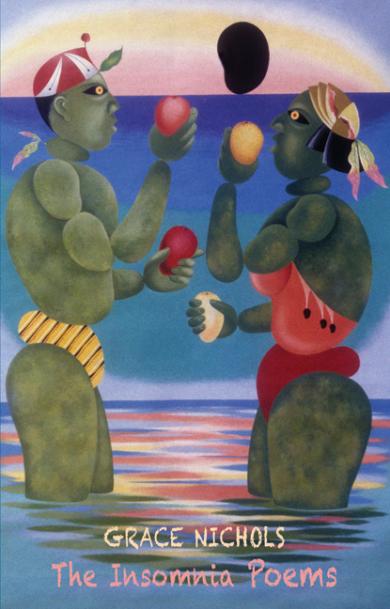
The Tracks of My Name is Grace Nichols's fourth new collection with Bloodaxe since her retrospective, I Have Crossed an Ocean (2010), following Picasso, I Want My Face Back (2009), The Insomnia Poems (2017) and Passport to Here and There (2020). She was awarded the Queen's Gold Medal for Poetry for 2021. Her poetry is studied in UK schools as part of the GCSE National Curriculum.
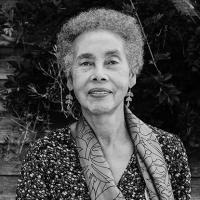
'Over the past four decades, Grace has been an original, pioneering voice in the British poetry scene. A noted reader and ‘performer’ of her work, she has embraced the tones of her adopted country and yet maintained the cadences of her native tongue. Her poems are alive with characters from the folklore and fables of her Caribbean homeland, and echo with the rhymes and rhythms of her family and ancestors. Song-like or prayer-like on occasion, they exhibit an honesty of feeling and a generosity of spirit. They are also passionate and sensuous at times, being daring in their choice of subject and openhearted in their outlook. Above all, Grace Nichols has been a beacon for black women poets in this country, staying true to her linguistic coordinates and poetic sensibilities, and offering a means of expression that has offered inspiration and encouragement to many. She is a moving elegist, and a poet of conciliation and constructive dialogue between cultures, but also a voice of questioning dissent when the occasion demands.' – Simon Armitage, Poet Laureate, on behalf of The Queen's Gold Medal for Poetry Committee
Praise for Grace Nichols' poetry:
‘Not only rich music, an easy lyricism, but also grit, and earthy honesty, a willingness to be vulnerable and clean.’ – Gwendolyn Brooks
‘She combines written language with musical language, and with song, and literal song in some cases. Also the way Grace has managed to fuse together the language and the syntax of her native Guyana with British poetical language as well to produce something both unique and really important as a model for other writers who want to follow in that same direction.’ – Simon Armitage, Poet Laureate, The Verb (at the Queen’s Library, Windsor Castle)
'Grace Nichols gently, imaginatively, carefully challenges contemporary Britain… and has gone on to continually articulate women’s voices, exile, ancestors, the echoes that resonate from a place of birth and renew her poetic treatment of them. What she showed me in The Fat Black Woman’s Poems and continues to show me as her work moves through geography, history, legend, is the holistic nature of writing – she opened up our options.' – Jackie Wills, On Poetry
'Nichols’s ninth collection is split, like her identity, between the Guyana where she grew up, and the England which she has made her home. She uses Creole and the imagery of ghosts to conjure up her coming of age in South America... she often draws on the natural world for her metaphors, and her style is characterised by alliteration and assonance. One section of unrhymed 14-line poems, illustrated with black-and-white photographs by Compton Davis, she calls “Back-homing (Georgetown Snapshot Sonnets).” She then brings her adopted country to life with poems on everything from tea and the Thames to the London Underground and the Grenfell Tower fire. A final set of elegies (including one to Derek Walcott) feels like a fittingly sombre close.' - Rebecca Foster, Shiny New Books (Poetry Highlights of 2020)
‘Another collection that sifts lived experience for personal truths is Grace Nichols’s Passport to Here and There. Nichols is known for her social commentary, a key voice in the literary interchange between the Caribbean and the UK. This new book contains poems that capture a conflicted view of an adopted England… These warmly nostalgic but undeceived works are, by her own reckoning, attempts to “preserve experiences, people and places in an effort to save them from time’s erasure”.’ – Ben Wilkinson, The Guardian (best recent poetry)
‘…this is not just a personal journey, it is also one that is bound up with politics and history, a concern for the environment and recent events that have dominated the media…. There is much to admire in this collection which charts so well the two different cultures that have helped to shape Nichols and her writing over the years. Fully recommended.’ – Neil Leadbeater, Write Out Loud, on Passport to Here and There
'Both Parker and Nichols dwell on questions of home and belonging. How does a faraway country of origin affect everyday life when it is a distant memory or an unseen land of family legend? The poets recognise the challenge of valuing two countries equally, and boldly expose the way in which devotion to a narrow vision of heritage can lead to exclusionary policies. Troubled by recent politics and ongoing racial injustice, they skirt despair by turning once again to poetry, which, as Nichols writes in her homage to Walcott, can be a way ‘to console ourselves/against the tyranny of Time and Death’. - Rebecca L. Foster, Wasafiri, on Passport to Here and There and Louisa Adjoa Parker's How to Wear a Skin (Indigo Dreams)
‘Unquestionably one of our most important living poets, Grace Nichols returns with her ninth collection of poems about a childhood in Guyana and move to Britain. With wit and warmth, Nichols delves into the what is lost and gained by being between places.’ - Katie Goh, i-D (Books to read in 2020), on Passport to Here and There
‘To write beyond middle age with anything like the transmuting fire of youth requires – so the adage says – much wilful forgetting in order to remember at a deeper level of meaning for readers. Grace Nichols in this new collection of her work succeeds in revisiting her Guyana past to make poems of lightness and diction and depth of feeling. The Demerara region takes on heraldic relevance and the people in it, principally her parents, along with flora and fauna, populate a landscape of metaphoric and allegorical longing. Her simple diction belies a complex emotional intellect and a feel for the balance of a line, its weightlessness in collusion with a depth of feeling. This may be Grace Nichols at her best, in poems that chime with bright imagery and lasting phrasing worthy of chanting to undermine and contradict, if not bringing down the authoritarian edifices of our dangerous times.’ – Fred D'Aguiar
‘Grace Nichols has wit, acidity, tenderness, any number of gifts at her disposal.’ – Jeanette Winterson
‘From her first collection in 1983, I Is a Long Memoried Woman, she has been a strong presence in the linguistic interweave between the Caribbean and the UK. Her poetry and prose move easily between the poised world of Western culture, Old World history and myth, and the gritty rhythms of the Caribbean everyday… There is wit, irony and passion…real poise.’ – Michelene Wandor, Poetry Review
‘Grace Nichols came to Britain from Guyana at the age of 27 and she has carried the warmth of her Caribbean sensibility through many a cold English winter. Her poems celebrate sensuality and generosity and attack petty mean-spiritedness… Deeply Caribbean in sensibility, she writes sensitively of other traditions, especially Africa and India.’ – Peter Forbes, Contemporary Writers
Grace Nichols reads at the 2022 Newcastle Poetry Festival
Grace read ‘A Brief Odyssey’ from The Insomnia Poems, published in 2017. She then read several poems from her 2010 I Have Crossed an Ocean: Selected Poems - ‘Old Canecutter at Airport’, ‘Dust’, ‘Grease’, and ‘With Apologies to Hamlet’. Grace finished her reading with two poems from her 2020 collection Passport to Here and There: ‘Battle’ and ‘Atlantic’. Filmed by Peter Hebden. Special thanks to Newcastle Centre for the Literary Arts.
Grace Nichols reads from 'Weeping Woman'
Grace Nichols reads extracts from 'Weeping Woman', her long poem in the voice of Dora Maar, who as Picasso's muse and mistress, was the inspiration for his iconic painting, 'Weeping Woman' (1937). This is an excerpt from a film made by Pamela Robertson-Pearce of Grace Nichols' reading Newcastle Centre for the Literary Arts in 2009, which also included poems from I Have Crossed an Ocean: that video can be viewed on that book's page on the Bloodaxe website.
Grace Nichols reads 'Hurricane Hits England' and 'Cat Rap'
Grace Nichols reads two of her best-known poems, 'Hurricane Hits England' (included on the GCSE English syllabus) and a poem for children (and cats), 'Cat-Rap', from I Have Crossed an Ocean. This is an excerpt from a film made by Pamela Robertson-Pearce of Grace Nichols' reading Newcastle Centre for the Literary Arts in 2009, which also included 'Weeping Woman', her poem in the voice of Picasso's muse Dora Maar from Picasso, I Want My Face Back: that video can be viewed on that book's page on the Bloodaxe website.
Ireland: Click here to order from Books Upstairs in Dublin
USA: This title is available from Indiepubs here. Alternatively, click here to order from Indiebound or Bookshop.org